Meta Unveils Post-Quantum Cryptography Migration Blueprint to Shield Against Future Quantum Threats
Meta Releases Post-Quantum Cryptography Migration Framework
Meta has publicly released a detailed framework for migrating to post-quantum cryptography (PQC), aiming to help organizations defend against the looming threat of quantum computer attacks. The tech giant warns that sensitive data encrypted today could be decrypted by future quantum systems—a tactic known as 'store now, decrypt later' (SNDL).

“We’re sharing our PQC migration lessons to help the entire industry prepare for a post-quantum future,” said a Meta cryptography lead. “Our goal is to provide practical guidance that accelerates the community’s transition.”
Quantum Threat Accelerating Industry Action
Research shows quantum computers will likely break conventional public-key encryption within 10 to 15 years, posing a critical risk to digital systems. The US National Institute of Standards and Technology (NIST) and the UK’s National Cyber Security Centre (NCSC) have already issued migration guidelines targeting 2030 for critical systems.
Meta’s framework, which introduces a tiered concept called “PQC Migration Levels,” addresses complexity and incomplete technical capabilities that have slowed adoption across the industry. The company has already begun deploying PQC across its internal infrastructure over a multi-year process.
Background: From Theoretical Risk to Real-World Action
NIST published the first industry-wide PQC standards—ML-KEM (Kyber) and ML-DSA (Dilithium)—in 2024, with algorithms like HQC on the way. Meta cryptographers are co-authors of HQC, reflecting the company’s deep involvement in shaping global cryptographic security.
The urgency is driven by SNDL attacks, where adversaries collect encrypted data now and wait for quantum decryption capabilities. “Even if quantum computers are still years away, sensitive data could be compromised retroactively,” the Meta lead added.
Meta’s Migration Approach and Lessons Learned
The company’s migration framework covers risk assessment, cryptographic inventory, deployment strategies, and security guardrails. It aims to help organizations efficiently transition without disrupting operations.
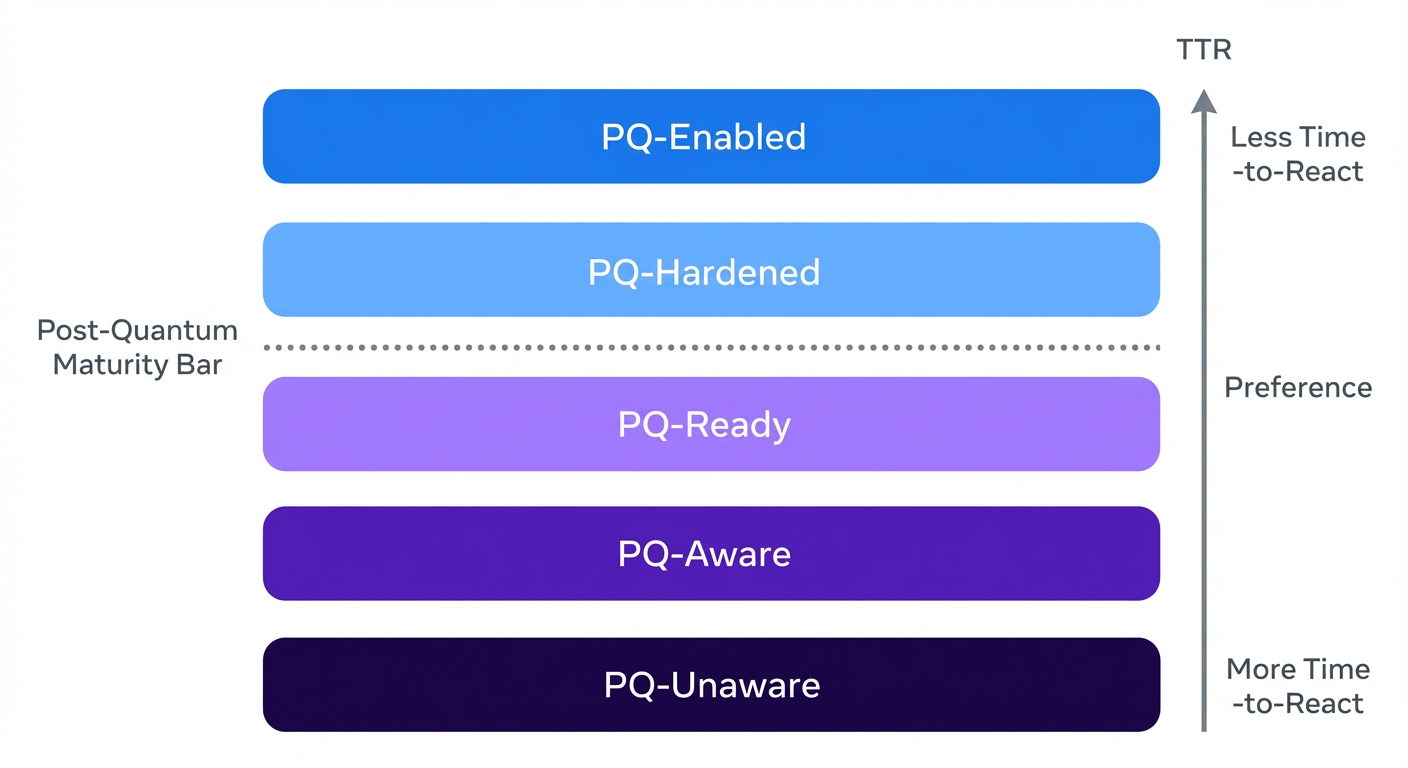
“By outlining our approach from risk assessment through deployment, we hope to contribute practical guidance that helps accelerate the broader community’s efforts,” the Meta lead said. The company emphasizes that migration must be proactive rather than reactive.
What This Means for the Industry
Meta’s disclosure provides a real-world blueprint that other enterprises, especially those with large-scale digital infrastructures, can adapt. The PQC Migration Levels offer a structured way to manage complexity across different use cases.
Jason Soroko, senior vice president at Sectigo, commented: “Meta’s initiative sets a precedent. Large-scale PQC migration is a massive undertaking—sharing these lessons de-risks the process for everyone.”
The framework also highlights the importance of early inventory and risk assessment, especially for organizations with billions of users. “We maintain strong security standards, and this migration is a key part of that commitment,” said the Meta lead.
Immediate Steps for Organizations
Meta recommends that organizations start by auditing their cryptographic assets, identifying critical systems, and beginning pilot deployments of NIST-approved algorithms. The company’s success with its own internal rollout demonstrates feasibility even for complex networks.
“The industry cannot afford to wait. SNDL is already happening, and the clock is ticking,” warned Soroko. “Meta’s framework gives us a practical starting point.”
Learn more about the quantum threat | Explore implications for your organization
Related Articles
- docs.rs Streamlines Documentation Builds: Default Target Reduction Coming in 2026
- Is NuScale Power a Smart Buy After Its Steep Drop? A Q&A Analysis
- Apple Stock Hits Record $300: Key Questions Answered
- Building Cryptographic Trust: How Azure's Integrated HSM Is Now Open Source
- HederaCon 2026: Miami Beach Hosts Premier Event for Tokenization and Digital Finance
- JDK 26 Begins Warning When Reflection Mutates Final Fields — JVM Enforcement Looms
- April 2024: DeFi Hack Incidents Hit All-Time High with $635M Lost
- 7 Key Insights: Why Wind Farm Customers Crave 'Shape' and Investors Seek Certainty – With Storage as the Game Changer