Bridging the Gender Gap in Generative AI: A Practical Guide to Equipping Women with Future-Ready Skills
Overview
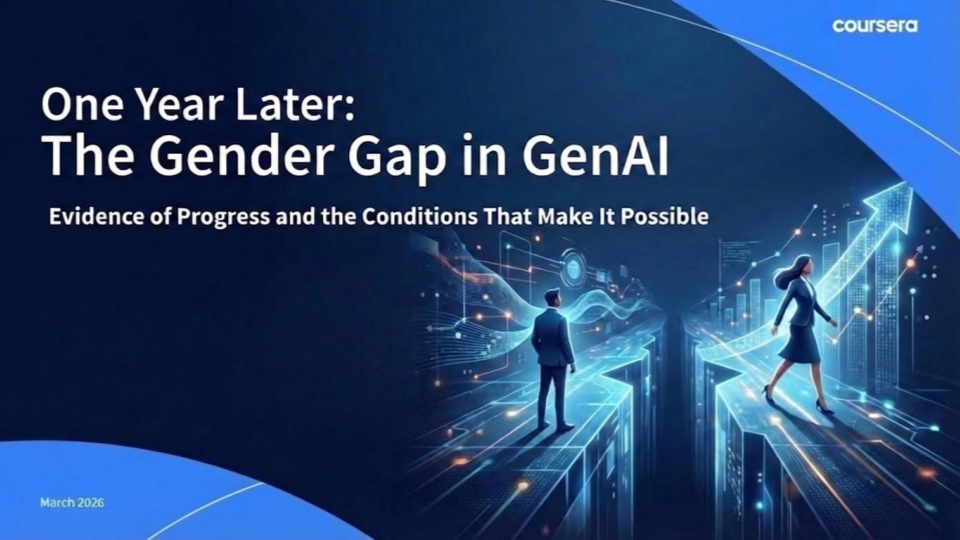
Generative AI (GenAI) is reshaping the global economy, with the potential to add up to $22.3 trillion by 2030. Yet, as this technology accelerates, a critical challenge persists: women remain underrepresented in GenAI learning and workforce participation. A new Coursera report, One Year Later: The Gender Gap in GenAI, reveals encouraging progress—women's share of GenAI enrollments rose from 32% in 2024 to 36% in 2025—but also highlights persistent regional disparities. This guide translates those findings into actionable steps for educators, employers, and policymakers. You'll learn how to analyze gender gaps, implement targeted programs, and accelerate women's engagement in GenAI skills.
Prerequisites
Before diving into this guide, ensure you have:
- Basic understanding of Generative AI—familiarity with concepts like large language models, prompt engineering, and ethical AI.
- Access to learning platform data—if you're an institution, access enrollment analytics from platforms like Coursera to track gender participation.
- Stakeholder buy-in—support from leadership or community to implement the recommended strategies.
- Regional awareness—knowledge of local cultural and economic factors that influence learning behavior.
Step-by-Step Instructions for Closing the GenAI Gender Gap
1. Assess the Current State of Gender Participation in GenAI Learning
Start by examining your organization's or region's data. Use enrollment records from online learning platforms to calculate the female share of GenAI course enrollments year-over-year. For example:
Female_share = (Female_enrollments / Total_enrollments) * 100
Year-over-year change = Female_share_2025 - Female_share_2024
Compare with global benchmarks: in 2024, women represented 32% of all GenAI enrollments on Coursera; by 2025, that rose to 36% globally. For enterprise learners, the jump was from 36% to 42%. Identify if your numbers lag or lead these averages.
2. Identify Regional and Demographic Patterns
Disaggregate data by region. The Coursera report shows stark contrasts:
- Latin America—countries like Peru (+14.5 percentage points), Mexico (+5.3), and Colombia (+4.5) doubled their female GenAI enrollment share year-over-year.
- Asia Pacific—Uzbekistan (+8.8 percentage points) leads globally; India, Coursera's largest GenAI market, rose 2.2 percentage points.
- English-speaking developed nations—the U.S. (-0.9), Canada (-1.0), UK (-1.8), Spain (-1.1), and Germany (-0.2) slipped backward.
Use these patterns to prioritize where interventions are most needed. For instance, if your institution is in a region that is declining, investigate structural barriers like cost, confidence, or access to technology.
3. Design Targeted Programs to Boost Women's Engagement
Borrow from successful examples. Latin America's success suggests that community-based initiatives, government scholarships, and partnerships with women's professional networks can be effective. Steps include:
- Create introductory pathways—offer non-technical GenAI courses (e.g., AI ethics, prompt engineering for content creators) to lower the entry barrier.
- Establish mentorship circles—pair female learners with industry mentors who have succeeded in GenAI roles.
- Provide flexible learning formats—asynchronous courses for those balancing work and family.
- Run targeted marketing campaigns—feature testimonials from women in GenAI careers.
4. Measure and Iterate Using Key Metrics
Track not only enrollment numbers but also completion rates, certificate attainment, and career outcomes. Use a dashboard with metrics like:
- Female enrollment share by course category (GenAI, critical thinking, etc.)
- Gender parity index (ratio of female to male enrollments targeted = 1.0)
- Year-over-year growth rate of female enrollments
Review quarterly and adjust strategies. For example, if completion rates drop, add more supportive elements like study groups.
5. Leverage Lessons from Global Standouts
Study countries like Uzbekistan and Peru. Their strategies may include:
- Government-backed digital literacy programs that explicitly target women.
- Integration of GenAI skills into vocational training for traditionally female-dominated fields (e.g., healthcare, education).
- Affordable internet and device access—subsidized by tech companies or NGOs.
Adapt these models to your local context.
6. Address Structural and Cultural Barriers
In regions where the gap is widening, such as the U.S. and UK, deeper issues may be at play. Common barriers include:
- Impostor syndrome—women may feel GenAI is a male-dominated field.
- Lack of visible role models—highlight female leaders in AI.
- Bias in learning platform recommendations—audit algorithms to ensure they don't reinforce stereotypes.
- Cost of certification—offer scholarships or employer sponsorship programs.
Common Mistakes and How to Avoid Them
Avoid these pitfalls when trying to close the gender gap:
- Ignoring regional context—a solution that works in Latin America may fail in North America. Always localize your approach.
- Focusing only on enrollments—without tracking completion and career outcomes, you may not achieve real parity. Measure retention as well.
- Treating women as a monolith—different demographics (students vs. professionals, urban vs. rural) require different tactics. Segment your audience.
- Neglecting male allies—gender equity is not a zero-sum game. Encourage men to mentor women and challenge biases in the workplace.
- Overlooking the role of critical human skills—the Coursera report also emphasizes essential competencies like critical thinking. Combine GenAI with these to build well-rounded leaders.
Summary
Closing the gender gap in Generative AI is both a moral imperative and an economic opportunity. By assessing current participation, identifying regional patterns, designing targeted programs, measuring progress, learning from global successes, and addressing structural barriers, institutions can accelerate women's engagement. The Coursera data shows that change is possible—Latin America and Uzbekistan have proven it. Now it's time to turn insights into action. Each step outlined here brings us closer to a future where the wealth generated by GenAI is distributed more fairly.
Related Articles
- Scaling Data Wrangling: From Preparation Pitfalls to AI-Ready Workflows
- Fragments of Understanding: AI Optimism, LLM Specs, and National Security
- Elastic Leaders Unveil AI-Powered Natural Language Queries for Operational Data at May 12 Webinar
- AI Governance Policies Fall Short on Operational Depth, Experts Warn
- Grafana Assistant Now Pre-Learns Infrastructure, Slashing Incident Response Time
- From Automation to Adaptation: Building an AI-Ready Enterprise
- Cybersecurity Q&A: Major Breaches, AI Threats, and Patches (May 2025)
- California Preschool Enrollment Hits Record High: Key Questions Answered