How Spotify Leverages Multi-Agent Systems for Smarter Ad Targeting
The Challenge of Modern Advertising
In today's digital landscape, advertising must strike a delicate balance between relevance and non-intrusiveness. For Spotify, the goal was never simply to deploy another “AI feature.” Instead, the engineering team set out to address a deeper structural problem: how to deliver ads that feel natural within the listening experience while maximizing value for both advertisers and users. Traditional rule-based systems often fell short, leading to irrelevant placements that frustrated listeners. A more intelligent, adaptive approach was needed—one that could understand context, user preferences, and advertiser goals in real time.
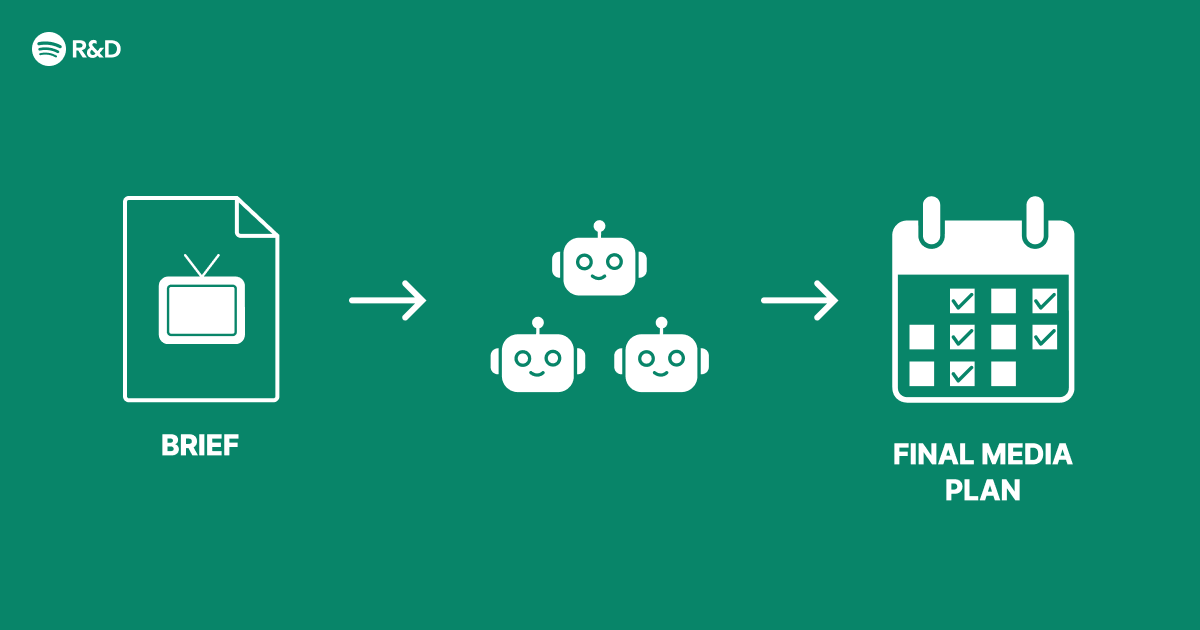
Introducing a Multi-Agent Architecture
To solve this, Spotify engineered a multi-agent architecture where multiple specialized AI agents work in concert. Unlike a monolithic model that attempts to handle all tasks at once, this system breaks down the advertising pipeline into discrete functions. Each agent focuses on a specific subtask—such as user profiling, ad selection, budget optimization, or timing coordination—and communicates with others to produce a cohesive outcome. This modular design offers flexibility, scalability, and the ability to update individual components without overhauling the entire system.
The Roles of Key Agents
The architecture comprises several distinct agents, each with a well-defined responsibility:
- User Intent Agent: Analyzes listening history, session context, and inferred mood to determine what type of ad would resonate.
- Ad Relevance Agent: Scores available ad inventory against the user’s profile and current context, filtering out mismatches.
- Budget Optimizer Agent: Allocates campaign budgets dynamically, ensuring high-value impressions are prioritized without overspending.
- Timing Agent: Decides the optimal moment within a listening session to insert an ad, minimizing disruption.
How the Agents Collaborate
Collaboration among agents happens through a lightweight message-passing protocol. When a user starts a session, the User Intent Agent generates a preliminary profile, which is shared with the Ad Relevance Agent. The relevance agent then queries the ad inventory and returns a shortlist of candidates. Simultaneously, the Budget Optimizer Agent evaluates the cost and predicted performance of each candidate, sending its recommendations. Finally, the Timing Agent uses signals from the audio stream to select the least intrusive break point. All decisions are aggregated into a final ad placement that is both relevant and timely.

This coordination is not one-shot; agents continuously re-evaluate in real time as new data arrives—such as a song change or a skip action—ensuring that the ad experience adapts on the fly.
Benefits and Real-World Results
The multi-agent approach has yielded measurable improvements. User engagement with ads has increased because the content is more relevant to their current listening context. Advertisers report higher conversion rates due to better targeting, while Spotify sees improved inventory utilization. Importantly, listeners are less likely to abandon sessions because ads feel less intrusive. The architecture also enables rapid experimentation: new algorithms can be deployed for a single agent without risking overall system stability.
Scalability and Future Directions
Because each agent operates independently, the system scales horizontally. As Spotify’s user base grows, new instances of agents can be spun up effortlessly. Looking ahead, the team plans to introduce agents that incorporate reinforcement learning to optimize long-term user satisfaction and advertiser ROI simultaneously. Additionally, privacy-preserving techniques are being integrated to ensure user data remains secure even as agents exchange insights.
Conclusion
Spotify’s multi-agent architecture represents a shift away from rigid, single-model advertising systems. By decomposing the problem into specialized, cooperating agents, the platform delivers smarter ads that respect the user experience while driving business value. This approach not only solved the structural challenge the team initially faced but also laid a foundation for future innovation in personalized advertising. As the industry evolves, such collaborative AI systems will likely become the new standard.
Originally published on Spotify Engineering Blog.
Related Articles
- Budweiser Launches ‘Great Delivery’ Campaign for Dual 150th and America’s 250th Anniversary
- Why System Tools Still Feel Like a Chore: Rethinking UX for Maintenance Software
- Top American Whiskeys of 2025: Blind Tasting Reveals Surprising Winners Under $70
- Diablo 4: Lord of Hatred Expansion Ending Explained and What Comes Next
- Why Data Transformation Fails in AI Pipelines and How to Prevent It
- 10 Key Insights on the Adobe-NVIDIA-WPP AI Agent Revolution for Marketing
- How to Transform Mundane System Tools into Desirable Experiences
- Why I Ditched Samsung's Old Sidebar for a Smarter App Alternative