Energy Secretary and NVIDIA Exec Detail 'Genesis Mission' to Power AI with AI, Unveil 5,000 Exaflop Supercomputers
Breaking: DOE and NVIDIA Announce Massive AI Supercomputers for Scientific Discovery
The U.S. Department of Energy (DOE) and NVIDIA are teaming up on the Genesis Mission — a sweeping effort to use artificial intelligence to accelerate scientific discovery — and they are building two colossal AI supercomputers to make it happen.
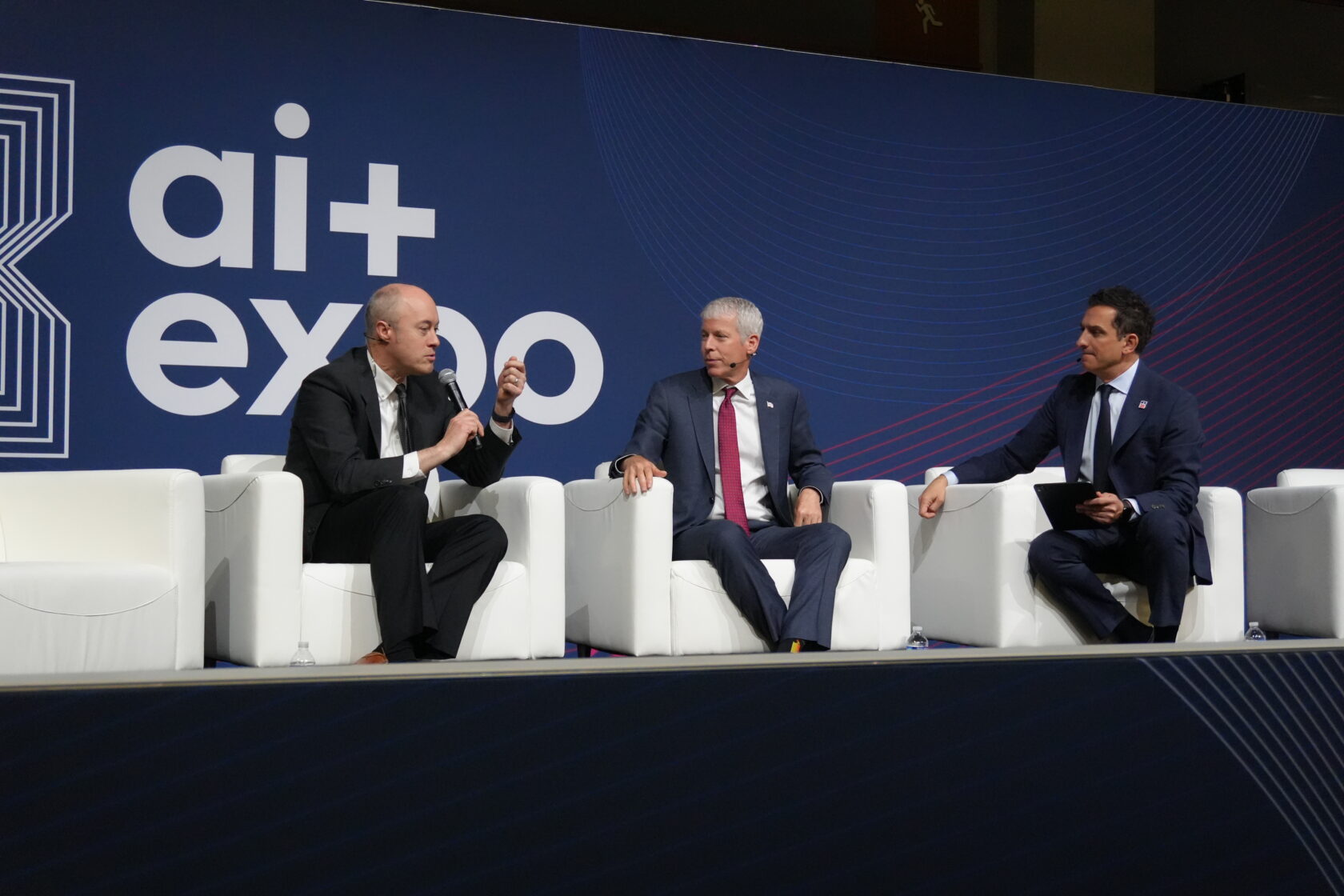
Speaking Thursday at the SCSP AI+ Expo, U.S. Energy Secretary Chris Wright and NVIDIA Vice President Ian Buck revealed plans for Equinox and Solstice, located at Argonne National Laboratory. Equinox, powered by 10,000 NVIDIA Grace Blackwell GPUs, is already coming online. Solstice, based on 100,000 next-generation Vera Rubin GPUs, will deliver a staggering 5,000 exaflops of performance — five times more than the entire current TOP500 supercomputer list combined.
“Energy is life,” Wright said. “The more energy you have, the more affordable energy you have, the more opportunities you have in your society.” He argued that American leadership in AI depends on American leadership in energy.
Buck added: “NVIDIA is 100% committed and invested in Genesis. I’ve never seen more excitement across the lab and industry.”
Background: The DOE-NVIDIA Partnership
The Genesis Mission is the DOE’s flagship AI-for-science program. It brings together the agency’s 17 national labs, world-class scientists, national-scale problems, and vast datasets. NVIDIA contributes the full stack — not just chips, but algorithms, methods, and over two decades of collaboration with the labs.
Buck emphasized that the same hardware and software powering today’s leading AI models are being used for scientific research. “We’re creating all the same technology, all the same hardware, all the same software building blocks used by all the major AI labs around the world,” he said, “for all of world science to go get access to.”
The partnership builds on a long history. NVIDIA has been building supercomputers with national labs for 20 years, and the new machines are the latest in that lineage. The company is also involved in other SCSP panels this week, including topics on AI workforce, physical AI, African infrastructure, and quantum leadership.
What This Means: AI Will Help Build the Energy It Needs
The central thesis of the Genesis Mission is that AI itself can accelerate the discovery of new energy technologies. By applying machine learning to problems like nuclear fusion, battery chemistry, and grid optimization, the United States aims to achieve energy abundance — and with it, continued AI dominance.
Wright’s message was clear: affordable, plentiful energy is the foundation of societal opportunity. The supercomputers being built are not just tools for science — they are engines for economic and strategic advantage. “The more energy you have, the more affordable energy you have, the more opportunities you have in your society,” he repeated.
For the tech industry, the announcement signals that the government is serious about AI infrastructure. The open-access model — where world scientists can use these machines — could democratize advanced computing. For energy markets, the implication is that AI will not only consume vast amounts of power but also generate solutions to produce it more efficiently.
Buck noted that an NVIDIA open-source AI model trained on 1.5 million physics papers, fine-tuned on 100,000 papers, is already accelerating research. The new supercomputers will only amplify that effect.
In short, the Genesis Mission represents a bet that AI and energy are two sides of the same coin — and that the United States must lead on both. As Wright put it, “American leadership in AI runs through American leadership in energy.”
Related Articles
- How to Coordinate Electric Bus Donations for Humanitarian Aid: A Step-by-Step Guide
- Hackaday Announces 2026 Green Powered Challenge Winners: Solar-Powered IoT and Ultra-Low-Power Hacks Triumph
- Mastering Dart and Flutter Development with Agent Skills
- Inside Installer No. 126: The Verge's Ruthless Self-Promotion Week and What We're Building
- AWS Launches Standalone Sustainability Console for Carbon Reporting
- Tank Pad Ultra Debuts: Rugged Tablet Packs 1080p Projector, But Processor Downgrade Raises Questions
- How to Build a Truckless Freight Revolution: A Step-by-Step Guide to Autonomous Cargo Haulers
- 10 Key Insights into Apple’s EU Trademark Battle Over a Citrus-Shaped Logo