Building and Understanding Dual-Core Quantum Computers: A Deep Dive into the Hanyuan-2 Architecture
Overview
Quantum computing is evolving rapidly, with new architectures pushing the boundaries of what's possible. One of the most intriguing recent developments is the Hanyuan-2, unveiled by CAS Cold Atom Technology (a Wuhan-based affiliate of the Chinese Academy of Sciences). This system claims to be the world's first dual-core quantum computer, boasting 200 qubits and extraordinary power efficiency. However, it has also sparked debate due to the lack of critical performance benchmarks. In this tutorial, we'll explore the concepts behind dual-core quantum processors, dissect the Hanyuan-2's design and claims, and guide you through understanding its implications. By the end, you'll have a solid grasp of this milestone and the questions it raises.
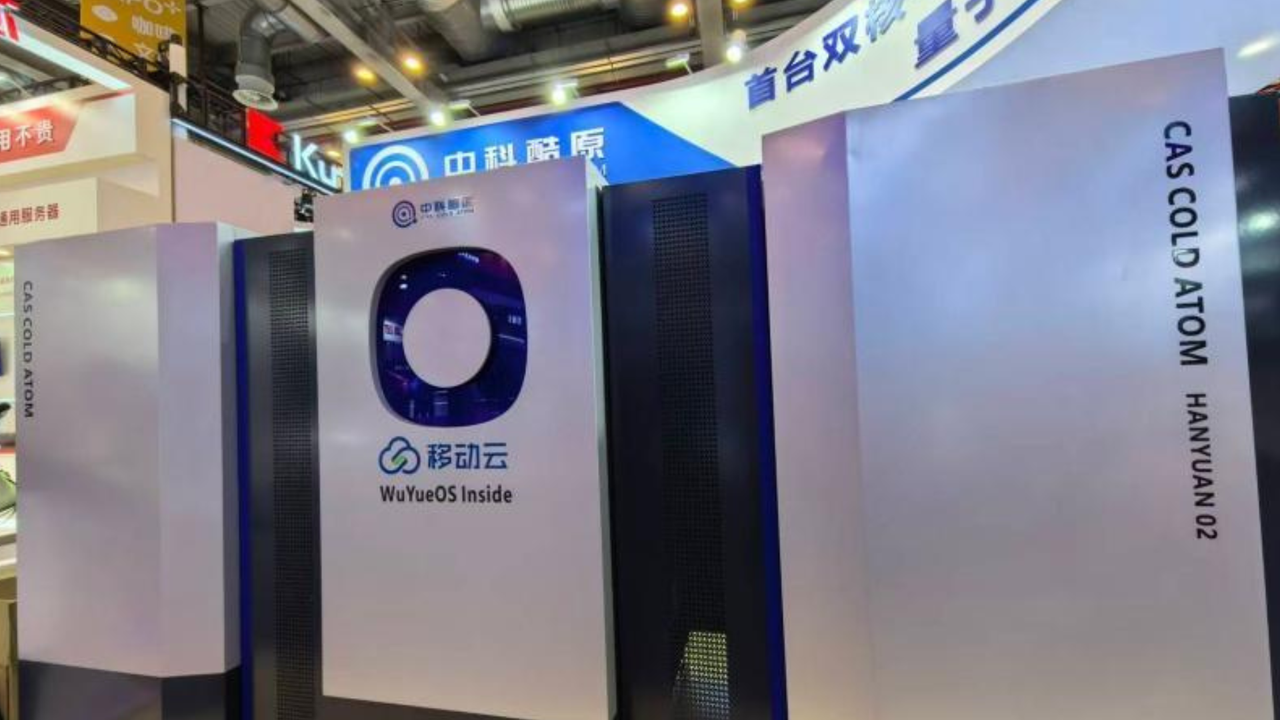
Before diving into the technical details, ensure you've reviewed the Prerequisites section to get the most out of this guide.
Prerequisites
To follow this tutorial comfortably, you should have:
- Basic quantum mechanics knowledge – understanding of superposition, entanglement, and measurement.
- Familiarity with qubit logic – how qubits differ from classical bits and the concept of quantum gates.
- General computing architecture awareness – the difference between single-core and multi-core classical processors.
- Curiosity about performance metrics – why benchmarks like quantum volume or gate fidelity matter.
If you're new to quantum computing, it's recommended to first review introductory material on qubit coherence and error rates before proceeding.
Step-by-Step Guide: Understanding the Hanyuan-2 Dual-Core Quantum Computer
1. The Dual-Core Quantum Processor Architecture
Classical dual-core processors have two independent processing units that can execute tasks in parallel. A dual-core quantum computer is conceptually similar, but with a crucial quantum twist. In the Hanyuan-2, the two cores are separate groups of qubits that can operate independently or be entangled with each other. This is not simply two quantum processors on one chip; the cores are designed to share quantum information through controlled interactions, enabling tasks that require both processing and memory units to work in quantum harmony.
The advantage? A dual-core design can potentially improve error correction by distributing logical qubits between cores, or enable complex algorithms (like quantum simulations) where one core prepares states and the other processes them. However, the physical implementation – likely using trapped ions or superconducting circuits – determines how effectively the cores can be coupled. The Hanyuan-2's architecture opens the door to modular quantum computing, where scalability is achieved by linking smaller processors.
2. Qubit Count and Power Efficiency Claims
The Hanyuan-2 is reported to have 200 qubits. For context, state-of-the-art quantum processors from companies like IBM and Google have reached hundreds of qubits, but power consumption is a growing concern. The Hanyuan-2 claims incredible power efficiency – meaning it operates at a fraction of the energy required by comparable systems. This could be due to the use of cold atom technology (as the company's name suggests) which naturally requires cryogenic cooling but might have lower overhead than superconducting circuits.
However, qubit count alone is misleading. A 200-qubit system with high error rates may outperform a 100-qubit system with near-perfect fidelities only for specific problems. The claim of power efficiency is intriguing because quantum computers are notoriously energy-hungry due to cooling and control electronics. If the Hanyuan-2 genuinely reduces power draw, it could make quantum computing more accessible, but we need validation.
3. Performance Benchmarks and Their Absence
The most critical missing piece is performance benchmarks. The Hanyuan-2's debut lacked concrete metrics such as:
- Quantum Volume – a measure of effective computational power combining qubit count, gate fidelity, and connectivity.
- Gate Fidelities – how accurate are single- and two-qubit operations?
- Coherence Times – how long can qubits maintain their quantum state?
- Error Rates – crucial for assessing whether the system can run useful algorithms without error correction.
Without these, the claim of being 'world's first dual-core' risks being overshadowed by questions of real-world usability. To evaluate the Hanyuan-2, we would need to see it perform a standard benchmark, such as random circuit sampling or a quantum chemistry simulation, and compare results to existing machines.
4. Real-World Implications and Use Cases
If the Hanyuan-2's performance matches its promises, it could accelerate research in:
- Optimization problems – dual-core entanglement could handle complex combinatorial tasks.
- Quantum cryptography – enhanced security through distributed entanglement.
- Materials science – simulating molecules with more qubits per core.
However, until independent verification occurs, treat the Hanyuan-2 as a promising but unproven prototype. The lack of benchmarks means we cannot yet confirm its superiority over existing single-core quantum computers.
Common Mistakes and Misconceptions
- Confusing qubit count with computational power – More qubits do not automatically mean better performance. Classical dual-core does not double speed either; quantum dual-core is even more nuanced due to entanglement overhead.
- Assuming dual-core means linear speedup – In quantum algorithms, splitting tasks across cores may incur communication penalties unless the cores are highly coherent and connected.
- Ignoring error rates – A 200-qubit system with high error may be less useful than a 50-qubit system with low error for certain tasks.
- Overlooking power consumption claims – While power efficiency is attractive, ensure the claimed efficiency is measured under full operation, not just idle.
- Believing benchmarks are optional – Without published benchmarks, any performance claim should be taken with skepticism. Reproducibility is key in quantum computing.
Summary
The Hanyuan-2 represents a bold step into dual-core quantum computing, offering 200 qubits and touted power efficiency. Yet, the absence of critical performance benchmarks leaves its true capabilities unclear. To fully evaluate it, we need metrics like quantum volume, gate fidelities, and error rates. For now, the Hanyuan-2 serves as a fascinating case study in the trade-offs between qubit count, architecture, and practical performance. As quantum computing matures, dual-core (and eventually multi-core) designs will likely become standard – but only when accompanied by rigorous testing.
Related Articles
- Pinpointing the Culprit: A Guide to Automated Failure Attribution in LLM Multi-Agent Systems
- The Squid's Survival Blueprint: How to Outlast Mass Extinctions
- Navigating a Career in Space Leadership: The Janet Petro Playbook
- 10 Breakthroughs in Video World Models: How Adobe’s State-Space Memory System Works
- 10 Critical Insights into Diagnosing Failures in LLM Multi-Agent Systems
- NASA's Next-Generation Mars Helicopters: Building on Ingenuity's Legacy
- How to Build a Secret Mathematical Society That Changes the World: The Bourbaki Method
- Beyond Disk Bottlenecks: How Diskless Databases Enable Real-Time Data Processing