Crafting Large Dry Ice Blocks Using Low-Pressure CO2: A Comprehensive Guide
Overview
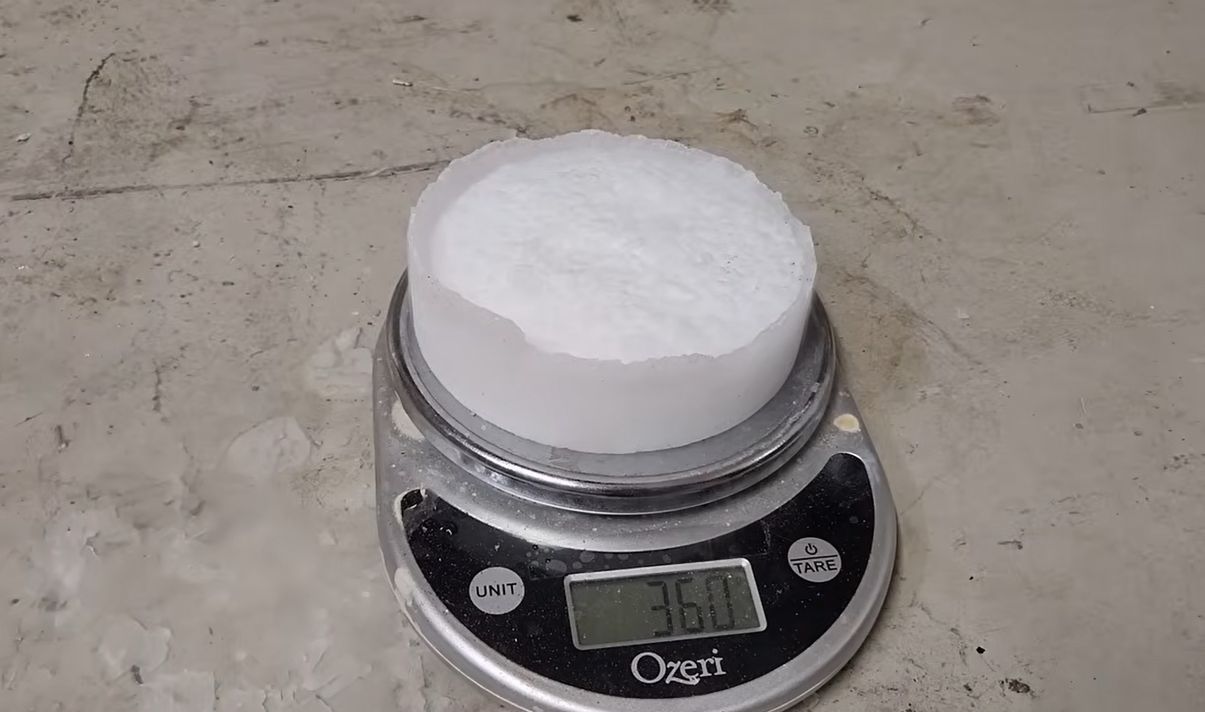
While the term 'dry ice' commonly refers to solid carbon dioxide, what you typically get from commercial sources is more accurately described as 'dry snow'—finely compressed CO2 crystals rather than a true solid block. For most applications, this granular form works fine, but for those with a passion for extreme cold (like Hyperspace Pirate), creating large, dense blocks of pure CO2 ice is a fascinating challenge. This guide walks you through a method that uses low-pressure CO2 and a specialized cryocooler to produce substantial dry ice pucks or cubes, with tips to minimize the fluffy snow and maximize solid ice.
Prerequisites
Before attempting this project, ensure you have the following equipment and materials. Safety is paramount—CO2 can displace oxygen, and cryogenic temperatures cause frostbite.
Required Equipment
- Joule-Thomson cryocooler: A device that uses the Joule-Thomson effect to cool gases. Commercial units can be expensive, but you can build one from surplus parts.
- Pressure chamber: A robust metal container (e.g., stainless steel) able to withstand at least 30 atm and equipped with inlet/outlet valves.
- Refrigerated bath: A temperature-controlled bath (around -78°C) to cool the chamber walls.
- Gas mixing system: Flow meters, regulators, and mixing manifold for the refrigerant gas mixture.
- CO2 supply: Industrial-grade CO2 cylinder with a regulator.
- Ethanol conversion apparatus (if making ethylene): boiling flask, condenser, tube packed with aluminum oxide pellets, and a furnace capable of 400°C.
Gas Mixture Details
The cryocooler requires a specific gas mixture to achieve the necessary cooling. The original recipe is:
- 15% butane (C₄H₁₀)
- 35% propane (C₃H₈)
- 50% ethylene (C₂H₄)
Ethylene is expensive to buy, so you can synthesize it by dehydrating ethanol over aluminum oxide (Al₂O₃) at 400°C. The reaction: C₂H₅OH → C₂H₄ + H₂O. Boil ethanol and pass the vapor through a heated tube of Al₂O₃; collect the ethylene gas.
Step-by-Step Instructions
Step 1: Prepare the Cryocooler Gas Mixture
- If making ethylene, set up the ethanol conversion apparatus. Heat the aluminum oxide to 400°C in a tube furnace. Boil ethanol at 78°C and route the vapor through the hot tube. Collect the emerging gas in a chilled container—it will be a mixture of ethylene and water vapor. Dry the gas with a desiccant (e.g., calcium chloride) to remove moisture.
- Using flow meters, mix the three gases in the correct proportions. Start with ethylene, then add propane and butane. Verify ratios with a gas chromatograph if available, or use partial pressure calculations in a mixing tank.
- Fill the cryocooler's working gas reservoir with the mixture to the recommended pressure (typically 10–20 atm).
Step 2: Set Up the Cooling System
- Place the pressure chamber inside the refrigerated bath. Ensure the bath temperature is stable at approximately -78°C (the sublimation point of CO2 at 1 atm). Use a coolant like liquid nitrogen or a mechanical refrigeration unit.
- Connect the CO2 cylinder to the pressure chamber via a valve and regulator. Also connect the cryocooler's cold head to the outside of the chamber (or circulate cooled gas through a jacket). The Joule-Thomson cooler will chill the chamber walls.
- Begin running the cryocooler with the gas mixture. Allow the chamber to reach thermal equilibrium—monitor temperature with thermocouples.
Step 3: Introduce CO2 Under Pressure
- Once the chamber walls are at -78°C, slowly open the CO2 valve. Pressurize the chamber to around 5–10 atm (low pressure relative to typical dry ice production). The CO2 will start to condense as liquid and then freeze on the cold walls.
- Keep the pressure constant using the regulator. The CO2 will solidify from the edges inward, forming a dense ice layer.
- After 15–30 minutes, close the CO2 valve and stop the cryocooler. Let the chamber warm slightly to release the vacuum, then open it carefully.
Step 4: Inspect and Extract the Dry Ice Block
- Open the pressure chamber in a well-ventilated area. You will see a solid cylinder of CO2 ice attached to the metal surface. Near the walls, it will be clear and dense; toward the center, it becomes fluffy snow.
- Gently tap the chamber to loosen the block, or use a non-sparking tool to pry it free. Wear insulated gloves—the ice is at -78°C.
- If the shape is irregular, you can reshape it by pressing or machining while cold (but note that CO2 ice is brittle).
Common Mistakes
- Incorrect gas mixture composition: Using wrong ratios reduces cooling efficiency. Verify purity and mix carefully.
- Moisture contamination: Water vapor in the chamber or gas lines will form regular ice, ruining the CO2 ice. Use dry gases and vacuum-purge the system.
- Insufficient cooling: The chamber walls must reach at least -78°C. If they are warmer, CO2 will not solidify but remain as a high-pressure liquid or gas.
- Rapid depressurization: Opening the chamber too quickly can cause explosive expansion of trapped gas. Vent slowly to avoid damage.
- Ignoring safety: CO2 is asphyxiant—work in a fume hood or open area. Frostbite risk: never touch dry ice with bare skin.
Summary
By using a Joule-Thomson cryocooler with a specific refrigerant mixture (15% butane, 35% propane, 50% ethylene) and a cooled pressure chamber, you can transform low-pressure CO2 into large, dense blocks of dry ice. The technique produces a solid ice shell around a snowy core, with potential for refinement. This guide covers equipment, ethylene synthesis, step-by-step operation, and common pitfalls. With careful preparation, you can achieve impressive dry ice blocks for cooling experiments or visual demonstrations.
Related Articles
- Could Black Licorice Help Treat Inflammatory Bowel Disease? New Research Says Yes
- Could a Constipation Drug Be the Key to Protecting Your Kidneys?
- A Parent’s Guide to Understanding PFAS in Baby Formula: What the FDA’s Latest Testing Really Means
- Instant Ad Account Diagnostics: Testing mureo Without Any Data Export
- 10 Surprising Facts About a Common Constipation Drug That Could Save Your Kidneys
- Genomic Testing Urged as First-Line Tool, Not Last Resort
- Hidden Treasures in Cannabis Leaves: Rare Flavoalkaloids with Medical Promise Unveiled
- Navigating the FDA Path to Approval for Alzheimer’s Agitation Therapies: A Step-by-Step Guide