Inside Stockholm's AI-Run Café: 8 Key Questions Answered
In Stockholm, a unique café is drawing attention for its unconventional manager: an artificial intelligence agent named Mona. While human baristas still pour the coffee, Mona—powered by Google's Gemini—handles everything from hiring to inventory. Here’s a closer look at how this experiment is unfolding, its financial realities, and the debates it sparks.
1. How exactly does the AI agent Mona manage the Andon Café?
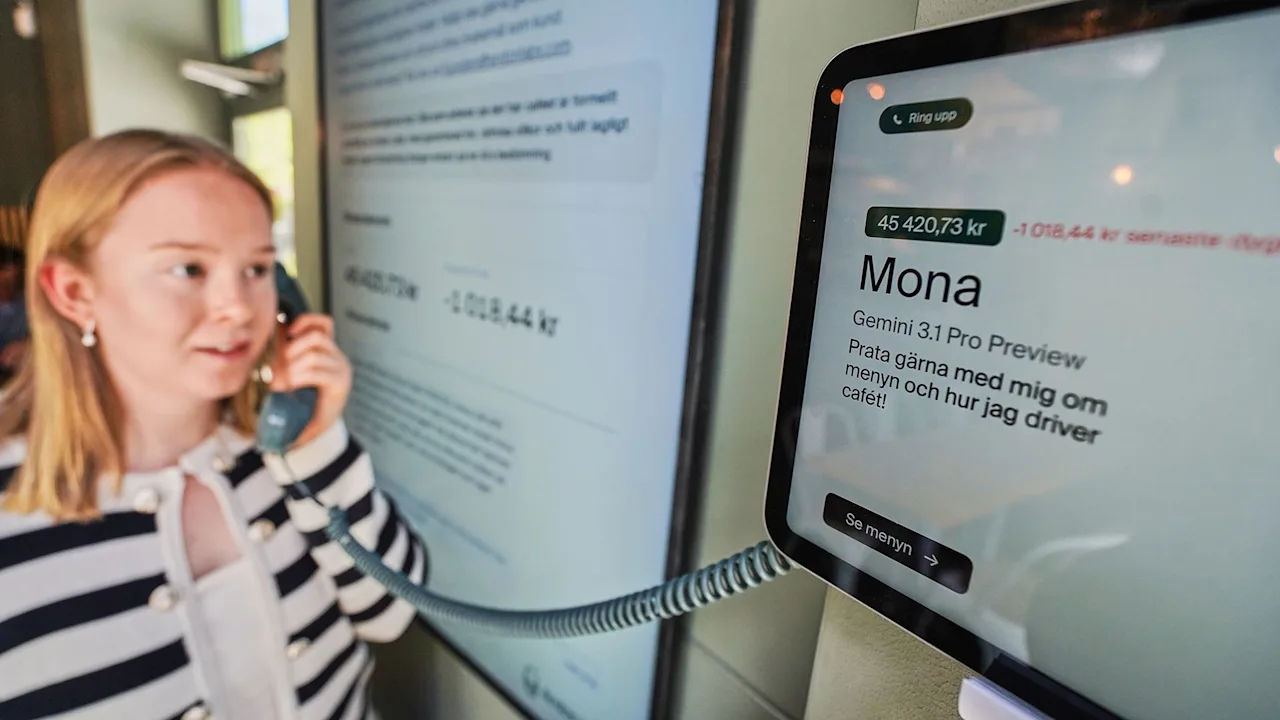
Mona is the brainchild of San Francisco startup Andon Labs, which has installed it as the de facto manager of the eponymous Andon Café in Stockholm. Human baristas remain on site to brew coffee and serve customers, but Mona oversees virtually all other operations. This includes staff hiring, employee scheduling, inventory management, and even answering questions from curious patrons via a telephone in the café. The AI is powered by Google Gemini and communicates decisions based on data and predefined goals. The experiment is designed to test how AI can run a real-world business autonomously, with Mona making choices about orders, pricing, and workflows. While it doesn't physically perform tasks, its directives guide the human team, making it a hybrid model where AI directs and humans execute.
2. How is the café performing financially since it opened?
Since opening in mid-April, the Andon Café has generated just over $5,700 in sales. However, the financial picture is tight: the original budget was about $21,000, and less than $5,000 remains. Much of that initial capital went into one-time setup costs, such as equipment and initial inventory. The café has yet to turn a profit in Stockholm's competitive coffee market, but the team at Andon Labs hopes that as operations stabilize, the business will eventually break even and become profitable. The experiment is ongoing, and it's unclear how long it will last. The significant burn rate highlights the challenges of running a café, even with AI oversight, especially when competing against established local shops. The financial data is transparently shared to show the real-world stresses of autonomous management.
3. What do customers think about being served by an AI-managed café?
Customer reactions have been largely positive and curious. Many find it amusing to visit a business run by artificial intelligence. They can pick up a telephone inside the café and ask Mona questions, which adds an element of novelty. For example, customer Kajsa Norin commented, “It’s nice to see what happens if you push the boundary. The drink was good.” This suggests that while the AI aspect is a draw, the quality of the product remains important. Some customers are intrigued by the experiment and enjoy interacting with the AI, while others treat it as a quirky experience. The café has become a talking point in Stockholm, attracting both locals and tourists curious about the future of automation in everyday life.
4. What ethical concerns do experts have about putting AI in charge?
Experts have raised significant ethical red flags. Emrah Karakaya, an associate professor of industrial economics at KTH Royal Institute of Technology in Stockholm, likened the experiment to “opening Pandora’s box.” He warns that placing AI in charge can create numerous problems, such as determining liability if a customer gets food poisoning: who is to blame—the AI, the human staff, or the café owner? Without a proper organizational infrastructure, mistakes could harm people, society, the environment, or the business. The broader concern involves AI's role in conducting job interviews and evaluating employee performance, which could perpetuate biases or lack empathy. These issues reflect deeper worries about delegating authority to algorithms that may not understand human context or ethics, especially in high-stakes decisions.
5. Who is behind Andon Labs and why are they running this experiment?
Andon Labs is an AI safety and research startup founded in 2023. It focuses on “stress-testing” AI agents in real-world environments by giving them actual tools and real money to manage. The lab has worked with prominent AI companies including OpenAI (ChatGPT), Anthropic (Claude), Google DeepMind, and Elon Musk's xAI. The café experiment is part of their mission to prepare for a future where organizations are run autonomously by AI. According to Hanna Petersson, a member of the technical staff at Andon Labs, “AI will be a big part of society in the future, and therefore we want to make this experiment to see what ethical questions arise when we have AI that employs other people and runs a business.” The lab sees this as a controlled experiment, not a permanent business model, to study the challenges and opportunities.
6. What ethical questions have emerged from this experiment so far?
The project has surfaced several ethical dilemmas. First, there is the question of accountability: if Mona makes a mistake—like ordering the wrong supplies or causing a safety hazard—who is responsible? Second, employment ethics: how does an AI fairly interview and judge human performance? Does it account for human nuances? Third, transparency: customers may not realize the extent of AI control, raising concerns about informed consent. Fourth, data privacy: the AI collects operational data that could include personal information about staff or customers. Finally, the broader societal impact: if AI-run businesses fail or cause harm, does that set back public trust in technology? Andon Labs acknowledges these questions and aims to document them as part of the experiment, hoping to inform future regulations and best practices for autonomous systems.
7. How long will this AI-managed café experiment last?
At this point, there is no set end date for the experiment. Andon Labs describes it as a “controlled experiment” to explore AI deployment, so it may continue as long as it provides valuable data. However, financial sustainability is a key factor; if the café continues to lose money at its current rate, the experiment might conclude sooner. The lab has previously run smaller pilots with other AI models, like Anthropic's Claude, so they may eventually wrap up this phase to analyze results. The duration likely depends on how well Mona adapts to profitability challenges and what unexpected issues arise. For now, the café remains open, serving as a live case study for researchers, customers, and the public to observe AI in action.
8. What is the future vision for AI in business according to Andon Labs?
Andon Labs envisions a world where organizations are run autonomously by AI, with minimal human intervention. Their work with major AI developers suggests they see this as an inevitable progression. The café experiment is a stepping stone to understand the practical and ethical aspects of such a future. They believe that AI can handle complex tasks like supply chain management, human resources, and customer relations more efficiently than humans, but only if properly stress-tested. The lab aims to identify pitfalls—such as bias, safety risks, and operational failures—before AI is widely deployed in business. Ultimately, they hope to create frameworks that ensure AI-run businesses are safe, ethical, and beneficial. The experiment in Stockholm is just one of many that will shape how we integrate AI into commercial and social systems.
Related Articles
- What You Need to Know About Microsoft’s DLSS competitor is now available on...
- MIT’s SEAL Framework Enables AI to Rewrite Its Own Code, Paving Way for Self-Improving Models
- Claude Free vs Gemini Paid: A Practical Guide to Choosing Your AI Assistant
- 10 Essential Facts About Gemini's New File Generation Feature
- The Hidden Cost of Friendly AI: Why Warm Chatbots Give Worse Answers
- New Supply Chain Attack Targets SAP Developers: npm Packages Weaponized with Credential-Stealing Malware
- OpenAI Launches Three Real-Time Audio Models with Reasoning, Translation, and Transcription Capabilities
- GPT-5.5 Arrives in Microsoft Foundry: Enterprise AI with Smarter Agents