Exploring Mars' Western Frontier: Perseverance Rover's Latest Selfie and Scientific Discoveries
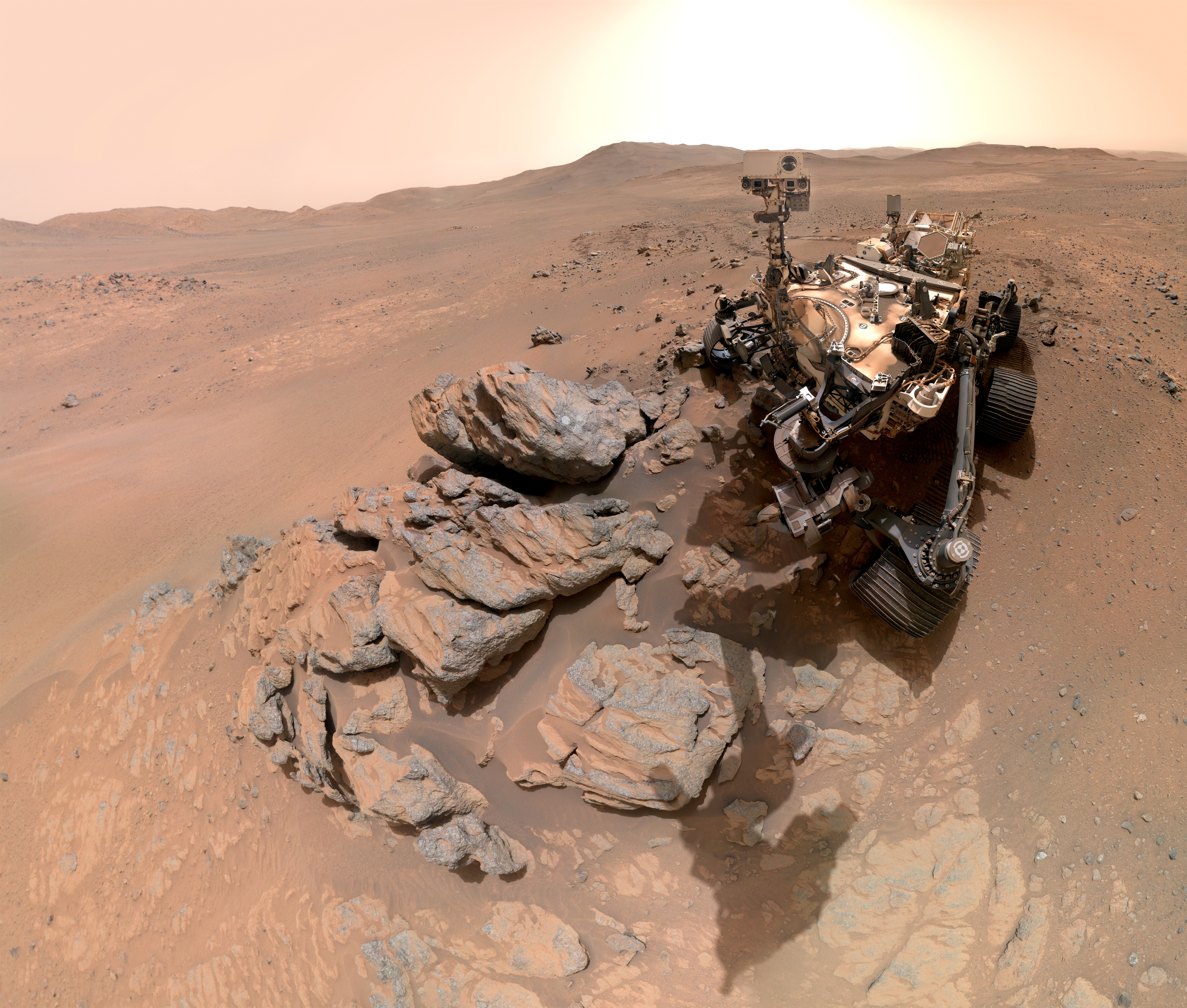
NASA's Perseverance Mars rover continues its epic journey, recently snapping a stunning selfie against the ancient landscape of the "Lac de Charmes" region. This area, located on the western rim of Jezero Crater, represents some of the most scientifically compelling terrain the rover has visited in its fifth science campaign, the Northern Rim Campaign. The selfie, composed of 61 images, not only showcases the rover's technical prowess but also highlights key geological findings. Below, we answer common questions about this milestone and the science behind it.
What is the latest selfie from NASA's Perseverance rover, and where was it taken?
Perseverance captured a self-portrait on March 11, 2026 (the 1,797th Martian day, or sol, of the mission) at a location nicknamed "Lac de Charmes." This site lies just beyond the western rim of Jezero Crater, marking the rover's deepest push west since landing over five years ago. The selfie was assembled from 61 individual images taken by the WATSON camera (Wide Angle Topographic Sensor for Operations and eNgineering) mounted on the rover's robotic arm. In the image, Perseverance appears to look down at a rocky outcrop called "Arethusa," which it had just abraded for analysis, with the crater's western rim stretching into the background. This is the rover's sixth selfie since arriving on Mars in 2021, and it provides a breathtaking view of the "Wild West" beyond Jezero.

What is the Northern Rim Campaign, and why is it significant?
The Northern Rim Campaign is Perseverance's fifth major science campaign, focused on exploring the terrain surrounding Jezero Crater's rim. After spending years studying the crater floor and delta, the rover is now venturing into ancient rocks that may predate Jezero itself. The Lac de Charmes region, part of this campaign, offers a rich geological record—exposed rocks, diverse textures, and potential clues about Mars' early history. This phase aims to understand the broader geological context of the area, including whether the rocks here were formed by volcanic activity or other processes, and what they reveal about the planet's ancient environment.
What did Perseverance learn by abrading the Arethusa outcrop?
During the selfie session, Perseverance had just completed an abrasion on the Arethusa outcrop. Abrading involves grinding a small circular patch of rock to expose its interior, allowing the science team to analyze fresh mineral surfaces. The analysis revealed that Arethusa is composed of igneous minerals—specifically, large crystals that form when molten rock cools slowly underground. This suggests that the rocks here likely predate the formation of Jezero Crater, meaning they formed deep within Mars and were later uplifted or exposed by later impacts. This finding is significant because it provides a window into the planet's crustal composition long before the crater existed.
What other imagery did Perseverance capture at Lac de Charmes?
In addition to the selfie, Perseverance used its Mastcam-Z instrument to capture a stunning 46-image panorama of an area nicknamed "Arbot" on April 5, 2026 (sol 1882). This enhanced-color mosaic offers one of the richest geological vistas of the mission, revealing a windswept landscape with diverse rock textures—from layered outcrops to smooth, dust-covered plains. The panorama helps scientists map the geology of the region, identify target rocks for future sampling, and understand how wind and other forces have shaped the terrain. The Arbot area, located within Lac de Charmes, showcases the variety of rock types beyond the crater rim.
How was the Perseverance selfie created?
The selfie was crafted using the WATSON camera, a high-resolution imager on the rover's robotic arm. To build the composite image, the arm made 62 precise movements over approximately one hour, capturing 61 separate photos. These were later stitched together on Earth to create a seamless panoramic self-portrait. This meticulous process ensures that the rover appears in the foreground while the surrounding landscape is sharply focused. The technique is similar to how previous Perseverance selfies were made (the rover has taken five prior ones). The camera's positioning allows the rover to "look" into the lens, giving the image an engaging, almost human quality.
Why is the Lac de Charmes region important for Mars science?
Lac de Charmes represents some of the most scientifically compelling terrain Perseverance has encountered. The igneous rocks found here, such as those in the Arethusa outcrop, are older than Jezero Crater itself, offering a rare glimpse into Mars' primordial crust. By studying these rocks, scientists can better understand early planetary processes like volcanism, crustal formation, and possibly even ancient water interactions. Additionally, the region's diverse rock textures—visible in the Arbot panorama—provide clues about the area's geological history, including whether it was once shaped by water, ice, or wind. These findings will guide future sampling decisions and help decipher the Red Planet's past.
Related Articles
- How Scientists Mapped the Hidden Structure of Your Nose's Smell Receptors – A Step-by-Step Guide
- Exploring China's Hanyuan-2: The First Dual-Core Quantum Computer
- How to Evaluate Weather Forecasting Models for Extreme Events: A Step-by-Step Guide
- Understanding the Surge in Indiana Gas Prices: A Comprehensive Guide
- How to Observe Lunar Impact Flashes During a Crewed Flyby
- 5 Critical Insights About the 8,500-Step Method for Keeping Weight Off
- 10 Lessons from the Engineer Designing Tomorrow's Wireless World
- Beyond Tatooine: 10 Surprising Truths About Planets in Binary Star Systems