10 Revolutionary Insights into Ouster's World-First Native Color Lidar
Lidar technology has long been the eyes of autonomous systems, but until now, it saw the world in grayscale. Ouster's new Rev8 sensor changes that by combining high-resolution 3D mapping with full-color imaging in a single device—a world first. This breakthrough promises to give robots and self-driving cars a richer, more human-like perception of their environment. Here are ten key things you need to know about this game-changing innovation.
1. What Is Native Color Lidar?
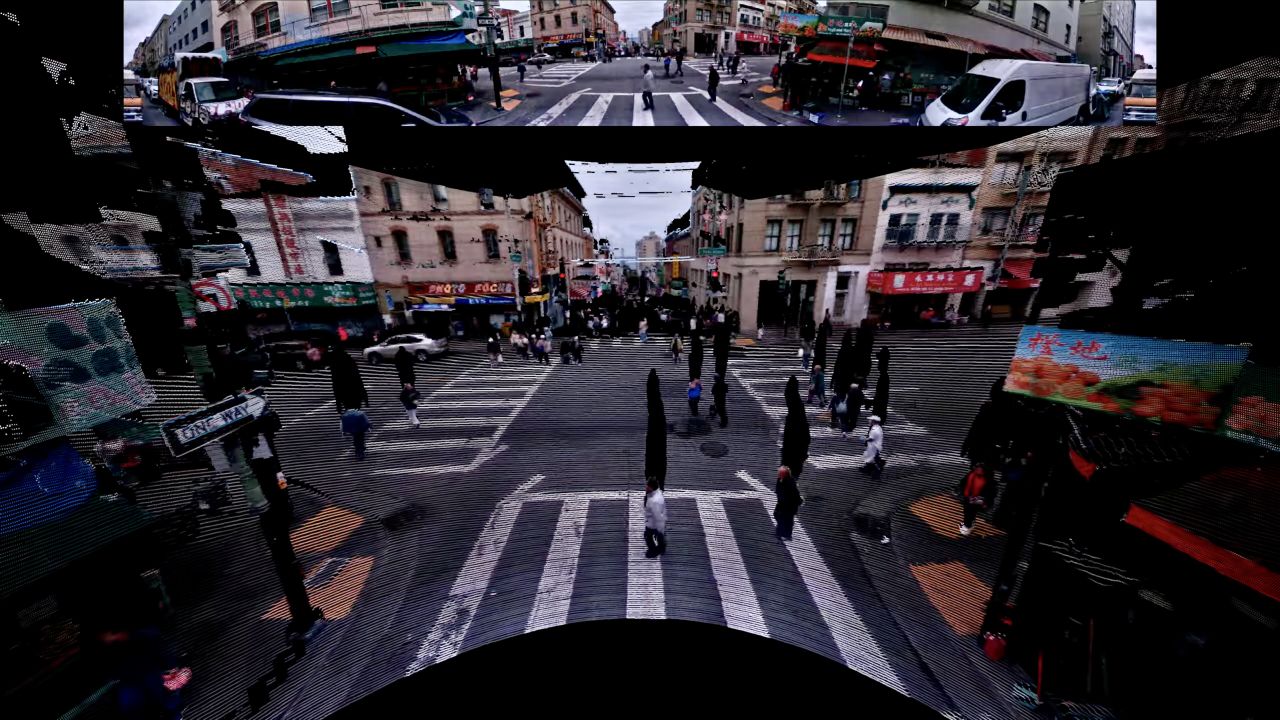
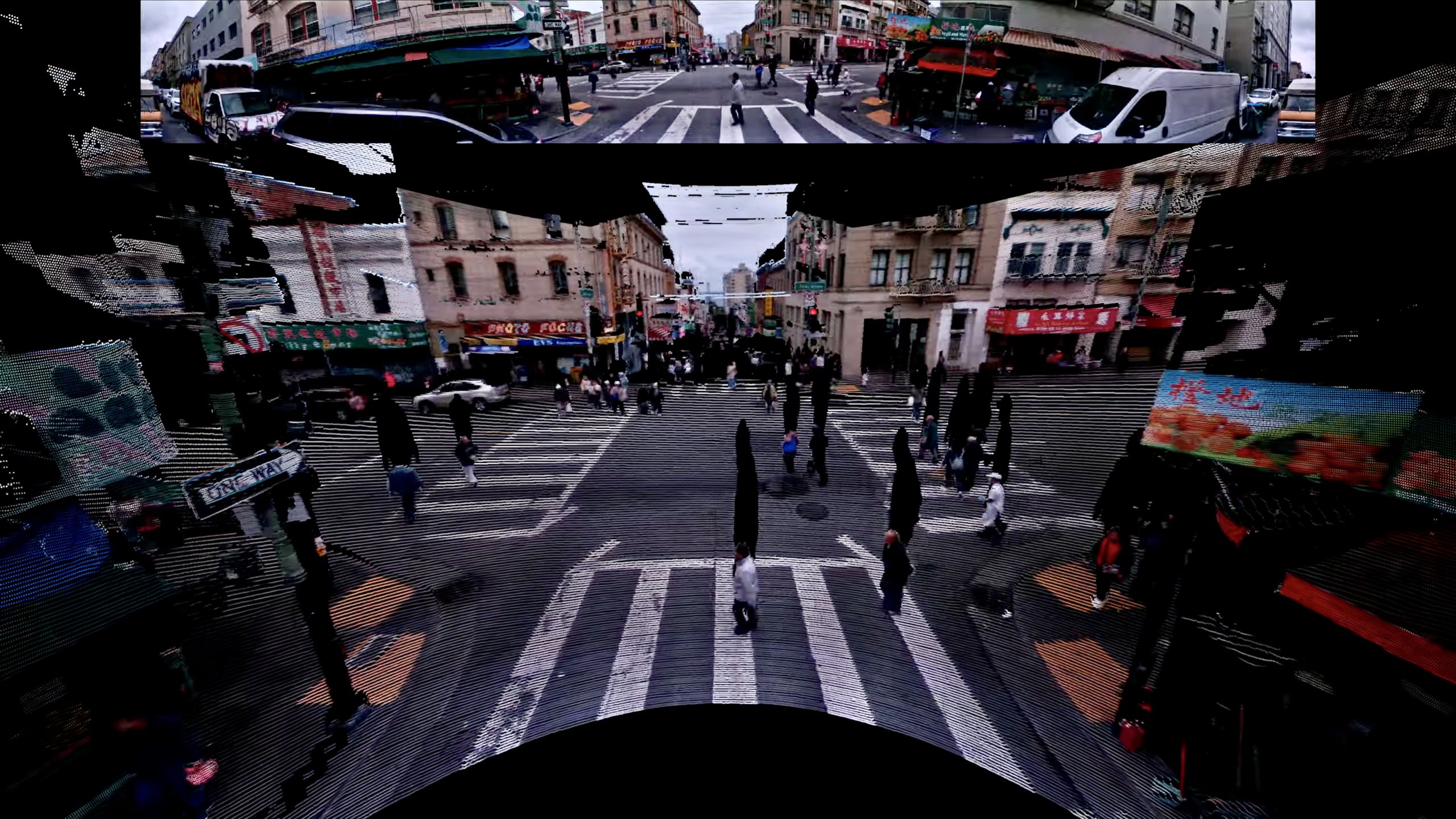
Traditional lidar measures distance by emitting laser pulses and timing their return, creating a point cloud of spatial data—but without color information. Native color lidar, as implemented in Ouster's Rev8, captures both the 3D geometry and the visible color of every point in real time. This means each point in the cloud carries an RGB value, effectively merging the functions of a camera and a lidar sensor. The result is a fully colored 3D model of the environment, enabling more intuitive and accurate scene understanding.
2. How Ouster's Rev8 Combines Camera and Lidar
Ouster's engineers achieved this fusion by integrating a high-resolution camera sensor alongside the lidar receiver on the same silicon substrate. Unlike previous solutions that require post-processing to align separate camera and lidar data, the Rev8 captures synchronized spatial and color data natively. This eliminates calibration issues and reduces latency, making it ideal for real-time applications like autonomous driving. The sensor outputs a unified stream of colored points, ready for immediate use by perception algorithms.
3. Why Color Matters for Autonomous Navigation
Color provides critical contextual cues that pure geometry cannot. For a self-driving car, a red traffic light and a red taillight look identical in grayscale lidar—but with color, they are instantly distinguishable. Similarly, lane markings, road signs, and pedestrian clothing become much clearer. This enhances object classification and reduces false positives, improving overall safety. As discussed in item 7, color also boosts detection of smaller objects like cones or debris that might be missed by geometry alone.
4. The Significance of Being 'World's First'
Ouster claims the Rev8 is the first native color lidar sensor on the market. Previous attempts to add color to lidar data required ex post facto fusion with separate camera feeds, which introduces alignment errors and timing mismatches. The Rev8's integrated design ensures perfect pixel-to-point correspondence from the moment of capture. This pioneering step sets a new benchmark for sensor fusion, potentially making traditional multi-sensor setups obsolete in many applications.
5. Key Applications in Robotics
Robots operating in dynamic human environments—such as warehouse bots, delivery robots, or service robots—benefit immensely from color lidar. They can now identify colored markers, read signs, and distinguish between similar-shaped objects by hue. For example, a robot in a factory can differentiate between red and green status lights, or pick an item based on its color. This reduces reliance on additional cameras or special lighting, simplifying the sensor suite and lowering costs.
6. Self-Driving Cars Benefit from Rich Data
Autonomous vehicles require robust perception under varying conditions. Color lidar gives self-driving cars a significant edge in understanding traffic signals, brake lights, and turn indicators—all of which rely on color. It also aids in identifying emergency vehicles by their flashing lights. Moreover, the dense, colored point cloud helps with localization (matching to HD maps) and path planning. As detailed in item 3, this extra layer of data can reduce the number of sensors needed, potentially lowering system complexity.
7. Improving Object Detection and Recognition
Object detection algorithms often struggle with ambiguous shapes. Color lidar provides a simple but powerful disambiguator: a green cylinder might be a plant, while a red one is likely a fire extinguisher. The Rev8's native color data allows machine learning models to leverage both geometric and chromatic features for higher accuracy. Early tests show improved recall for small objects like traffic cones or debris, which are critical to avoid. This dual-modal data reduces reliance on separate cameras and their associated computational load.
8. Potential Impact on Mapping and Surveying
Surveyors and mapmakers have traditionally combined aerial lidar with optical imagery to produce colored 3D models—a labor-intensive process. Ouster's Rev8 streamlines this by capturing both in one pass. For example, a drone equipped with Rev8 can generate a fully textured 3D map of a construction site or archaeological dig in real time. This speeds up workflows and reduces post-processing errors. The technology could also enable real-time monitoring of changes in vegetation or infrastructure using color changes as indicators.
9. Technical Breakthroughs Behind Rev8
Achieving native color lidar required innovations in sensor design and signal processing. Ouster developed a custom CMOS image sensor that shares the same optical path as the lidar receiver, ensuring perfect alignment. Advanced algorithms then fuse the intensity of returning laser pulses with the camera's color data at the pixel level. The Rev8 maintains the same range and resolution as Ouster's previous sensors while adding color, without increasing power consumption significantly. This makes it a drop-in upgrade for existing autonomous platforms.
10. What This Means for the Future of Autonomous Systems
With native color lidar, the boundaries between sensing modalities begin to blur. Future systems may no longer need separate cameras, lidars, and radars—opting instead for unified sensors like the Rev8 that deliver rich data in a single stream. This simplifies hardware, reduces costs, and improves reliability. As industries from agriculture to logistics adopt autonomy, color lidar could become a standard component. Ouster's Rev8 is just the first step; we can expect even higher resolutions and broader spectral sensitivity in the coming years.
In summary, Ouster's Rev8 native color lidar is a landmark innovation that gives autonomous systems the gift of color vision. By merging camera and lidar into one seamless sensor, it enhances safety, efficiency, and capability across robotics, self-driving cars, and mapping. This is not just an incremental improvement—it's a new way of seeing the world in 3D.
Related Articles
- 10 Essential Insights for Validating Non-Deterministic Agent Behavior in CI/CD
- 7 Critical Insights into AI Coding Agent Supply-Chain Attacks
- How to Deploy Context-Aware Intrusion Detection with SnortML and Agentic AI
- Q4 2025 ICS Threat Report: Phishing Worms Surge Amid Declining Infection Rates
- 10 Reasons Why the Narwal Freo Z10 Turbo Is a Robovac Game-Changer (Now $599)
- Enterprise AI Takes Action: NVIDIA and ServiceNow Unite for Autonomous Agents
- Astra Explained: ByteDance's Dual-Model Approach to Robot Navigation
- How to Predict RNA Splicing and Isoform Usage with an AI Framework: A Practical Guide