Simulating Complex Systems: How Hash.ai Empowers You to Model the World
Introduction: Two Approaches to Understanding the World
When you're trying to figure out how a system works, you often start with simple math. For example, if you increase the hot water flow by x, the temperature of the mixture rises by y. This kind of linear relationship is easy to grasp and predict. But many real-world systems are far too complex for such straightforward equations. In those cases, you need a different approach: simulation.
The Limitations of Simple Math
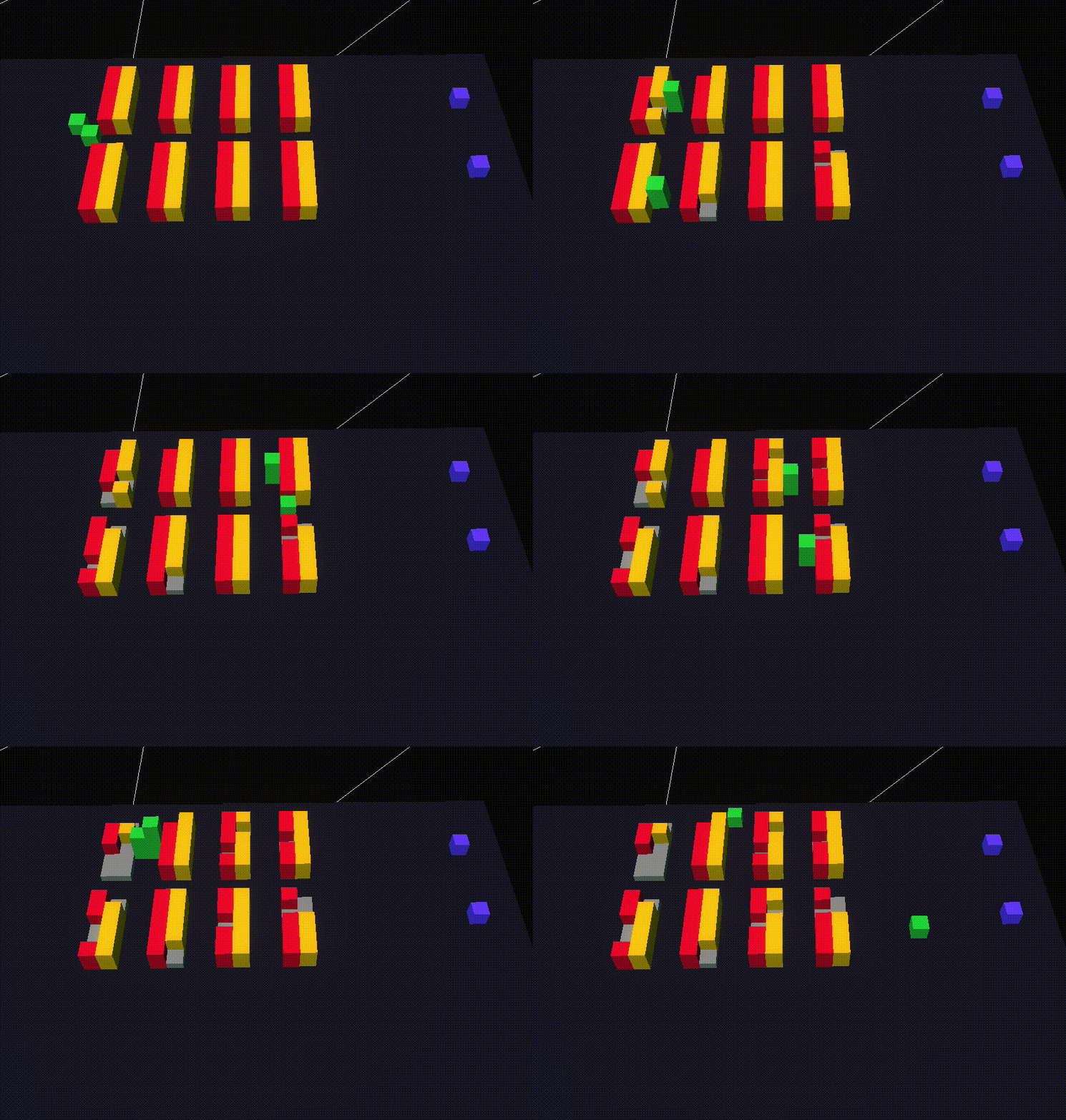
Basic math fails when interactions between components are nonlinear, feedback loops exist, or individual behaviors matter. Consider a warehouse where everything runs smoothly with fewer than four employees. But when you add a fifth worker, they start getting in each other's way. Suddenly, the fifth employee adds zero additional throughput. You can't easily write a formula that captures this—the relationship depends on the physical layout, the tasks each person does, and how they coordinate.
When Simulation Becomes Essential
In the warehouse example, you may not know the mathematical relationship between headcount and throughput, but you do know what each employee does: they walk to shelves, pick items, and pack boxes. If you can describe those behaviors in code, you can simulate the entire operation. By tweaking parameters—like the number of workers, their speed, or the rules they follow—you can observe how the system behaves and find ways to improve.
How Agent-Based Modeling Works
This technique is called agent-based modeling. Each individual (or "agent") is programmed with simple rules. When you run the simulation, these agents interact and produce surprising emergent patterns. You don't need to predict the outcome beforehand—you just let the simulation reveal it. It's like running a virtual experiment hundreds of times faster than in real life.

Introducing Hash.ai: A Platform for Building Simulations
That's exactly what Hash.ai is built for. It's a free, online platform that lets you create agent-based simulations using JavaScript. You can model anything from warehouse workflows to traffic patterns, biological systems, or economic markets. The platform handles the visualization, data collection, and running of experiments, so you can focus on the logic.
Getting Started with Your First Simulation
Start by imagining a scenario where individuals follow a few rules. Write a tiny JavaScript function to represent each agent's behavior—like "move towards a shelf if empty-handed" or "pick item if at shelf." Then run the simulation and watch what happens. You can adjust parameters on the fly and run multiple iterations to see which configurations work best.
Hash.ai also provides tutorials and community examples to help you learn. The platform is designed to be accessible even if you're not a professional programmer, though some basic coding knowledge helps.
Conclusion: Transform Complex Problems into Learnable Models
When basic math isn't enough, simulation bridges the gap. By modeling the behavior of each component, you gain deep insights that formulas alone can't provide. Hash.ai makes this process easy, free, and collaborative. Ready to try it? Read Dei's launch blog post for inspiration, then build your own simulations and see how the world really works.
Related Articles
- Guide to Most Frequently Asked Questions About Affiliate Marketing
- Comprehensive Guide to Recent Microsoft 365 Updates for Windows Subscribers
- Why Your Privacy Shouldn't Be a Corporate Decision: Key Questions Answered
- Mastering What to Look for in an Exposure Management Platform (And What Most ...
- Everything You Need to Know About the Microsoft 365 Deal: AI, Storage, and More
- 8 Key Takeaways from Tim Cook's Earnings Call: No New Macs or iPads Until September?
- Mesa 26.1: A Deep Dive into Open-Source Vulkan Driver Enhancements
- Unverified Supply Chain Leak Suggests iPhone 20 Display May Have Distortion Issues